
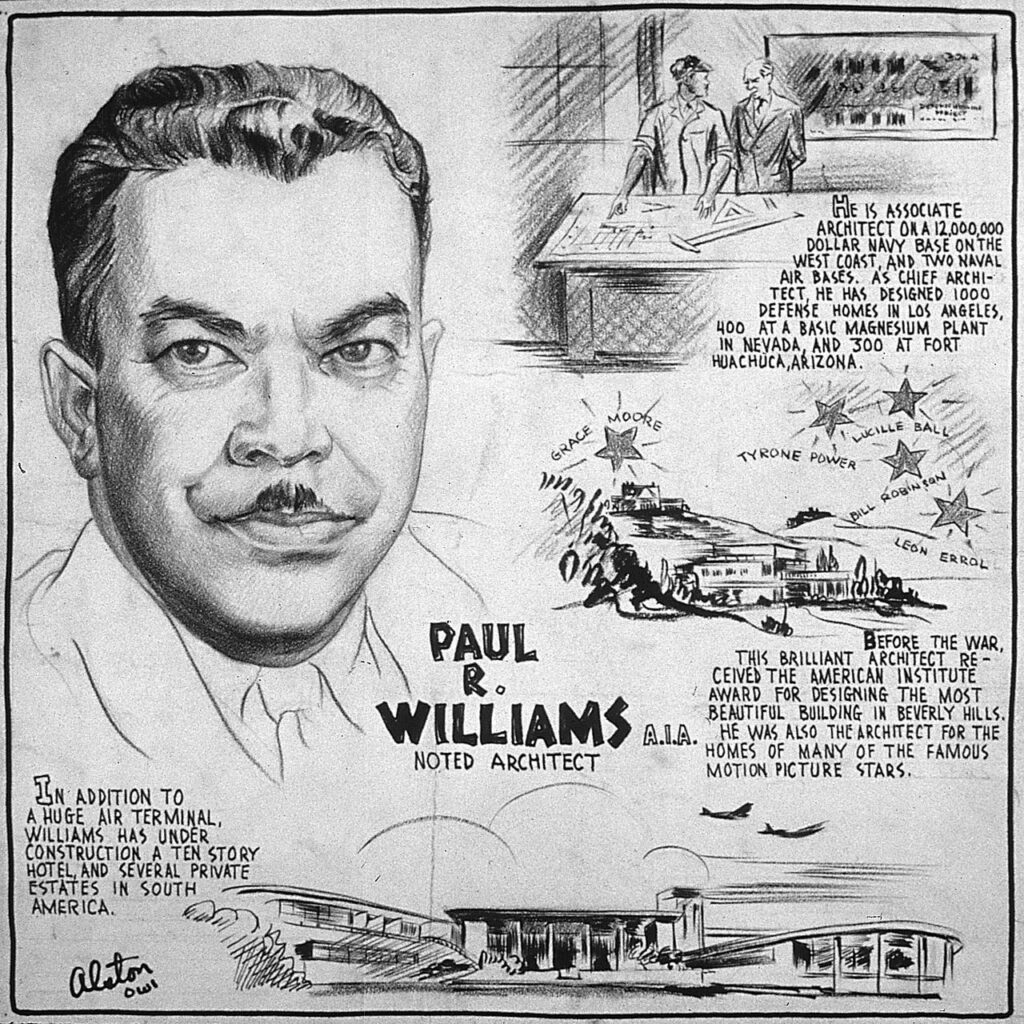
Though slavery ended in 1865, it is not a surprise that people of color have been given the shorter end of the stick especially when it came to career growth and a spot in the lime light. But there was one man who broke barriers in the architectural industry that paved the way for his fellow African Americans.
Paul Williams was the first African American member of the American Institute of Architects. He was also known by the nickname “Architect to the Stars” having designed more than 3,000 structures all over the US including homes for Hollywood big wigs.
Who is Paul Williams?
Paul Revere Williams was born on February 18, 1894 in Los Angeles, California. His father moved to LA from Memphis to start a fruit business but contracted tuberculosis and passed away when Paul was just 2. His mother died two years later of the same illness. At the age of 4, he was orphaned. He and his brother Chester Jr. was in the foster care system for a while, but Paul was adopted by C.D. and Emily Clarkson. (Source: Black Listed Culture)
The Clarksons were very supportive of Paul. They gave him the best education they could provide and even supported his interest in the arts. He was the only African-American in the elementary school in his district. (Source: Black Listed Culture)
When Paul was in high school, a friend of the family who was in the construction industry influenced him to study geometry and physics to get into Architecture. After all, Paul was incredibly talented. Sadly, not everyone encouraged him to take this path. His guidance counselor discouraged him from pursuing the career because of his color. Back in those days a black architect was simply unheard of. (Source: Black Listed Culture)
Needless to say, Paul Williams didn’t listen to the negativity around him and decided to take up architecture anyway. By 1921 he became a certified architect and worked under John G. Austin. By the year 1923, he opened his own firm and later on served as the architect to the US Navy in World War II. (Source: LA Conservancy)
Paul wrote in an essay for American Magazine entitled “I Am A Negro”; I wanted to vindicate every ability I had. I wanted to acquire new abilities. I wanted to prove, that I, as an individual deserved a place in the world. Proving to the rest of the world that you shouldn’t limit yourself to the color of your skin. (Source: Fast Company)
Why Was He Called The Architect To The Stars?
One of the reasons Paul Williams’ architectural style stood out was because he incorporated the personality and character of his clients to the project. In those days, he didn’t really have the luxury to insist on his way – so he decided to go through a different route. (Source: PBS)
After designing the push-button home of the Frank Sinatra and being featured on television, Paul got quite busy designing homes for Hollywood celebrities. Having a Paul Williams home then became a trend. (Source: PBS)
Other celebrities who had a Paul Williams home include; Lucille Ball, Bill Robinson, Lon Chaney, Barbara Stanwyck, Desi Arnaz, and Tyrone Power.
The Legacy
The impact Paul Revere Williams had on every aspiring architect of color is beyond amazing. His perseverance, determination and resiliency is what made him overcome the hurdles he has faced. Racism and discrimination hasn’t ended up until today, but it is up to us to help break those barriers for the greater good. Talent, skill and moxie isn’t based on the color of your skin.